
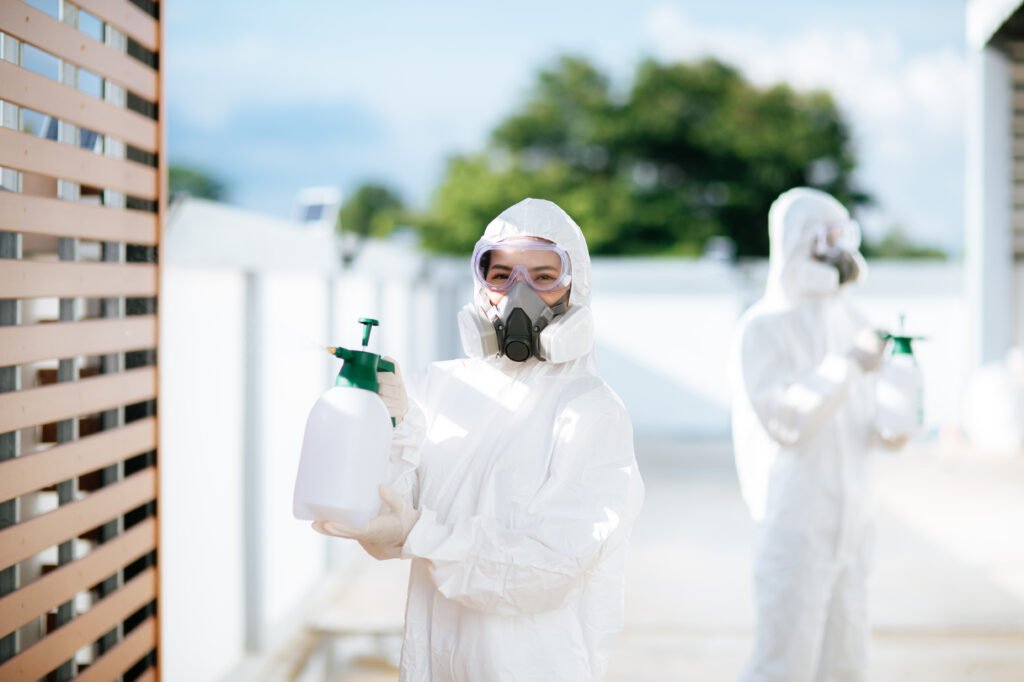
Disinfection specialist team in personal protective equipment (ppe) suit, gloves, mask and face shield, cleaning Quarantine area with a bottle of pressurized spray disinfectant to remove covid-19
Introduction
Wood-boring insects like woodworms and termites are among the most destructive pests for wooden structures and furniture. For decades, people have relied on traditional pest control methods such as chemical sprays, fumigation, and heat treatments. However, modern technology has introduced microwave-based systems like the Shashel device, which claim to eliminate pests more efficiently and safely. Understanding the differences between these approaches helps in choosing the right method for long-term wood protection.
What Is the Shashel Device?
The Shashel device is a microwave-based pest control system designed to eliminate insects hidden inside wood. It works by sending controlled microwave energy into timber, heating moisture inside the insects and killing them at all life stages, including eggs, larvae, and adults. The key idea is internal heating rather than surface treatment, which allows it to reach pests that are deep inside wood structures.
What Are Traditional Pest Control Methods?
Traditional pest control includes several techniques used for decades:
- Chemical insecticides and wood preservatives
- Fumigation of entire structures
- Heat treatment of infested areas
- Surface spraying and drilling injections
These methods usually rely on chemicals or external heat to kill insects. In most cases, they target either the surface of the wood or require sealing the entire structure for fumigation.visit Shashel
Key Differences Between Shashel Device and Traditional Methods
1. Method of Action
The Shashel device uses microwave energy to heat water molecules inside wood and insects, destroying pests from within. This internal heating ensures deep penetration into hidden tunnels.
Traditional methods, on the other hand, rely on chemical absorption or external heat, which may not always reach deeply buried larvae.
2. Depth of Treatment
Shashel microwaves can penetrate deeply into wooden structures and target pests inside beams, furniture, and concealed areas. This makes it highly effective for hidden infestations.
Traditional sprays and surface treatments usually affect only the outer layers of wood. Even fumigation may not fully penetrate dense or sealed wood structures.
3. Chemical Use and Safety
One of the biggest differences is safety. The Shashel device is a chemical-free method, meaning no toxic substances are released into the environment or left in furniture. It is considered safer for homes, pets, and historical buildings.
Traditional pest control often uses toxic chemicals that can leave residues, require ventilation, and may pose health risks if not handled properly.
4. Speed of Treatment
Microwave treatment is generally faster because it directly heats and kills insects within minutes of exposure.
Traditional fumigation or chemical treatments can take longer, sometimes requiring hours or even days of exposure, plus additional waiting time for ventilation and safety clearance.
5. Impact on Wood Structure
The Shashel device is designed to preserve wood integrity while eliminating pests. It heats internally without damaging external surfaces when used correctly.
Traditional chemical treatments may sometimes weaken wood fibers, cause discoloration, or require drilling holes that leave permanent marks.
6. Environmental Impact
Shashel technology is eco-friendly because it does not introduce toxic chemicals into the environment. It relies purely on electromagnetic energy.
Traditional pest control methods often involve pesticides and fumigants that can affect air quality and contribute to environmental pollution.
7. Effectiveness Against Life Stages
Microwave treatment is highly effective against all life stages of insects—eggs, larvae, pupae, and adults—because heat destroys biological activity completely.
Traditional methods may struggle with eggs or deeply hidden larvae, especially if chemical penetration is limited.
8. Application Area
The Shashel device is suitable for targeted treatment of furniture, beams, flooring, and localized infestations. It is especially useful for precision work.
Traditional fumigation is better suited for whole-building treatments but may lack precision for specific hidden infestations.
9. Cost and Maintenance
Microwave devices involve higher initial investment but can be cost-effective in the long run due to reduced repeat treatments.
Traditional methods may seem cheaper initially but often require repeated applications, especially in recurring infestations.
Conclusion
Both Shashel microwave technology and traditional pest control methods aim to eliminate wood-boring insects, but they differ significantly in approach and efficiency. The Shashel device offers a modern, chemical-free, and deeply penetrating solution that targets pests inside wood. Traditional methods rely more on surface treatment and chemicals, which may still be effective but come with limitations such as toxicity and incomplete penetration.
In summary, microwave technology represents a more advanced and environmentally friendly evolution of pest control, while traditional methods remain widely used due to familiarity and availability. The best choice depends on the level of infestation, safety requirements, and the type of wooden structure being treated.